
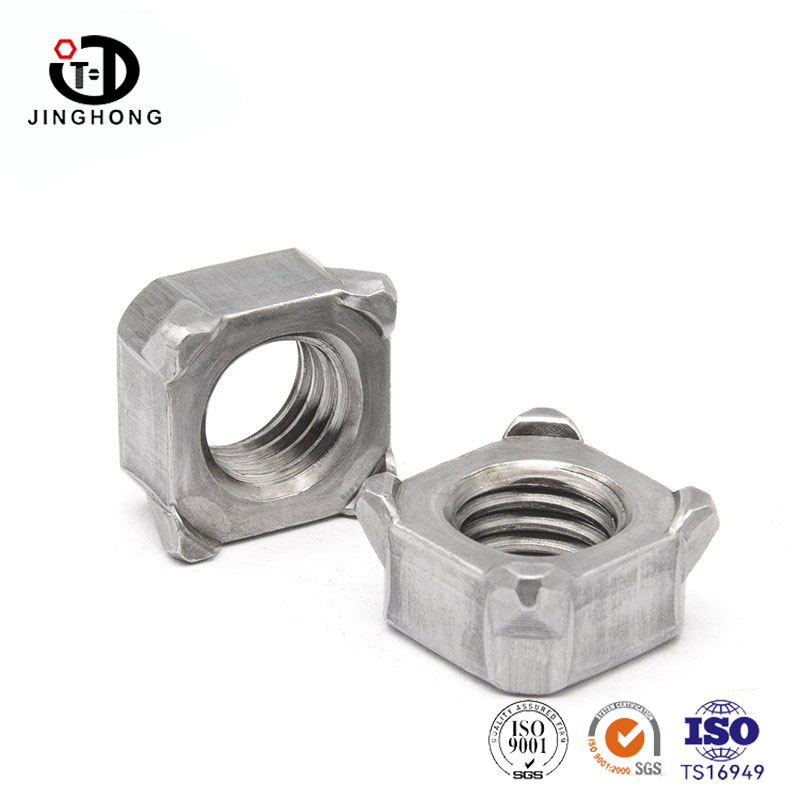
DIN928 Square Welded Nut
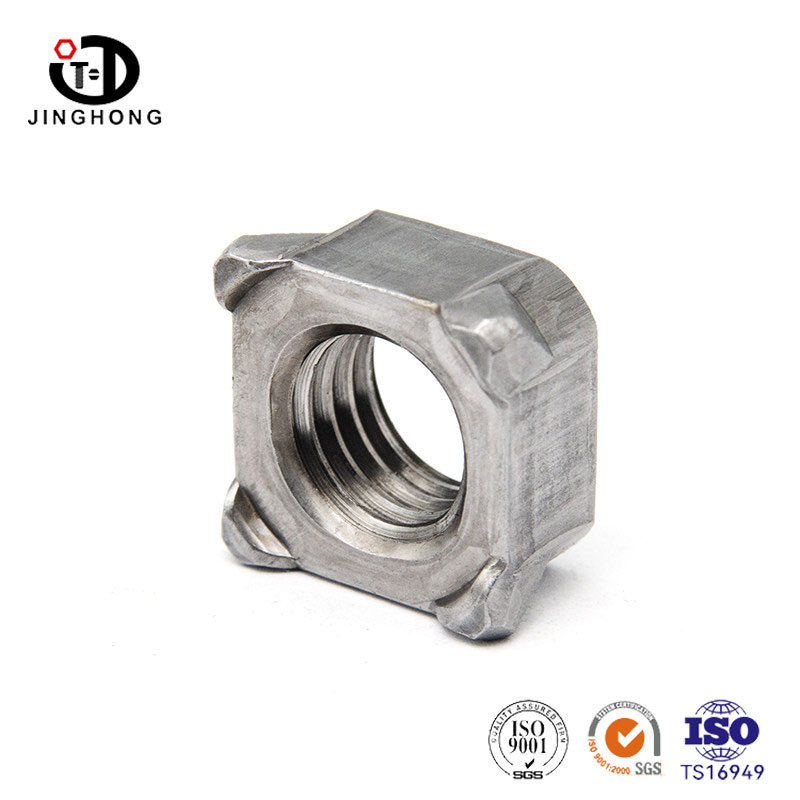
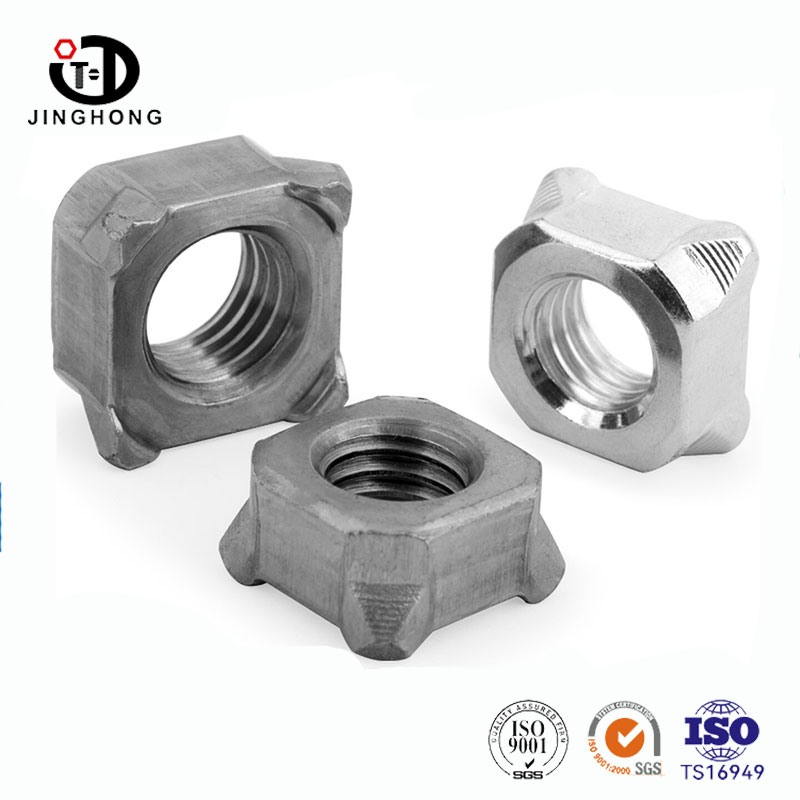
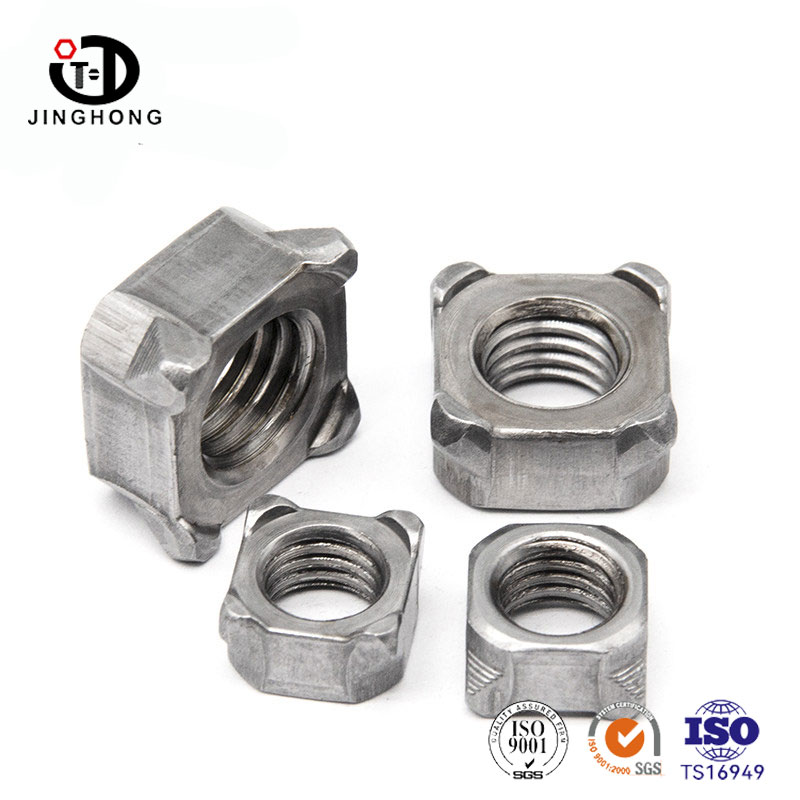
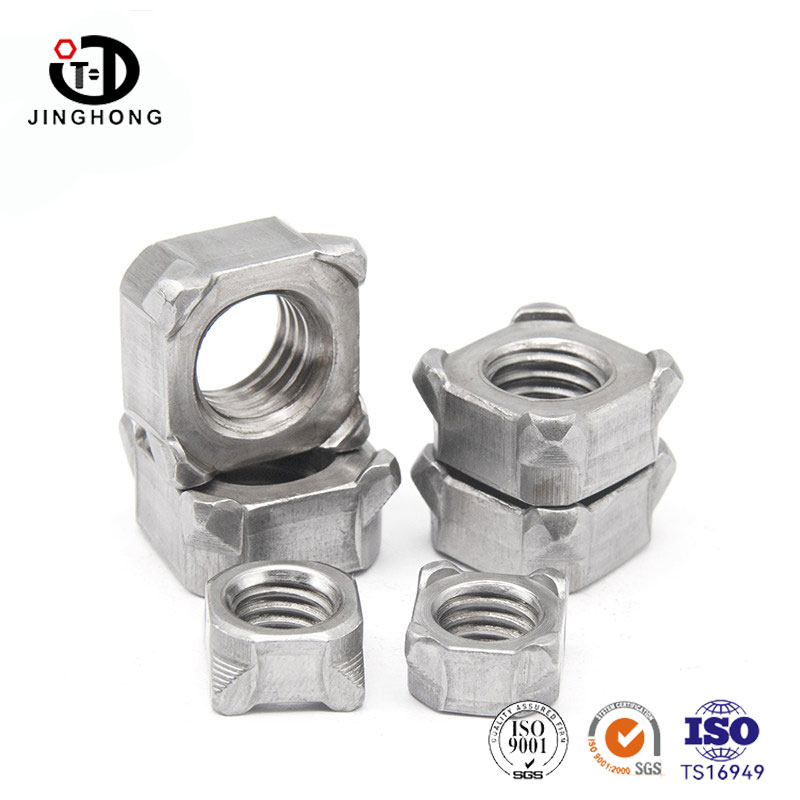
Our factory specializes in producing DIN928 square welded nuts according to German standards. It is square in shape, with a raised platform and welding points at the bottom, and is used in conjunction with a spot welding machine. After welding, it is firm and not loose. The material can be selected from carbon steel or stainless steel 304, and the surface can be treated. Specifications range from M4 to M16, both coarse and fine teeth can be produced, and regular sizes are readily available in stock.
Send Inquiry
Product Description
Ordinary nuts need to be screwed onto bolts or held by hand from the back of the workpiece to lock. The welding nut is directly welded to the surface of the workpiece without drilling, tapping, or going to the back for operation. Once welded, it is permanent and will not loosen.
There are several raised welding points at the bottom of the nut, as well as a circular protrusion. The protrusion is used for positioning - first punch a small hole on the workpiece, place the protrusion of the nut into the hole, and the position is fixed. Then the electrode of the spot welding machine is pressed down, and a high current passes through the welding point. The welding point instantly heats up and melts, melting the nut and workpiece together. The whole process takes less than a second. After welding, the back of the workpiece is flat, and the front is a welded nut.
| Name | DIN928 Square Welded Nut |
| Material | Carbon Steel |
| Standards | GB,DIN, BSW, JIS, UNC, UNF, Non-standard, Customized Drawing |
| Thread | Metric Coarse, Metric Fine, UNC, UNF, BSW, BSF. |
| Sizes | M4-M16Metc |
| Finish | Plain/Black/Zinc plated/others |
| Price | 0.03usd/pcs-0.50usd/pcs |
| MOQ | Stardard item(Usually little hundred-little thousand)/determined if non-standard |
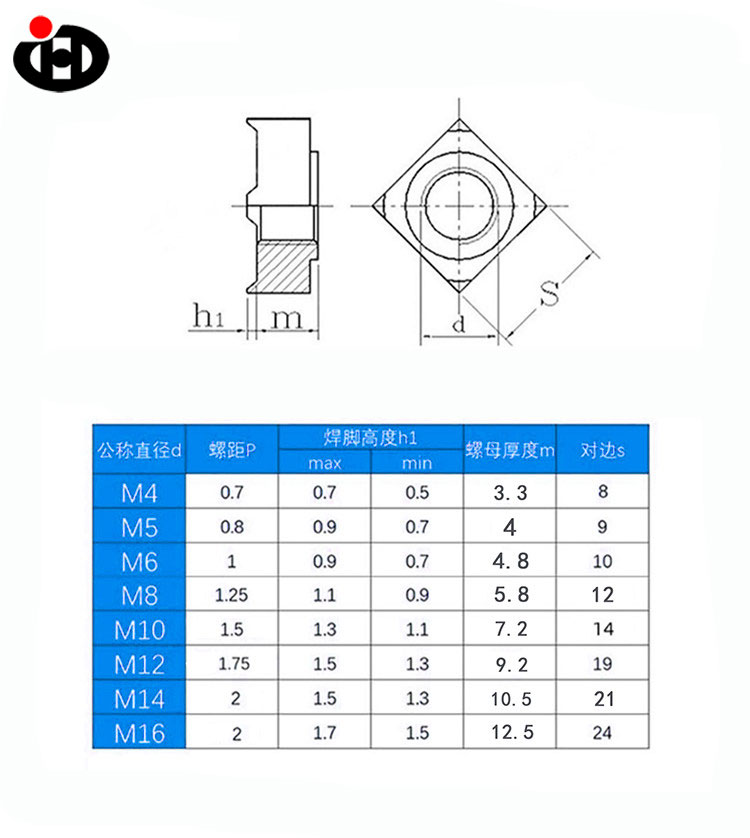
Product Feature
Spot welding fixation without drilling or tapping: The nut is directly welded to the surface of the workpiece without drilling, tapping, or supporting on the back. Place the workpiece on the front and the welding machine will press it to complete the task. Once welded, it is permanent and will not loosen. Ordinary nuts need to be threaded through with bolts or supported from the back, welding nuts saves these things.
Boss positioning, welded out without deviation: There is a circular boss at the bottom of the nut, and a positioning hole is punched on the workpiece. Once the boss is inserted, it will get stuck. When welding, if the electrode is pressed down, the nut will not deviate. After welding, the position of the threaded hole will be the same as the design drawing, without any deviation.
Send Inquiry
Please feel free to fill your inquiry in the form below. We will reply you in 24 hours.
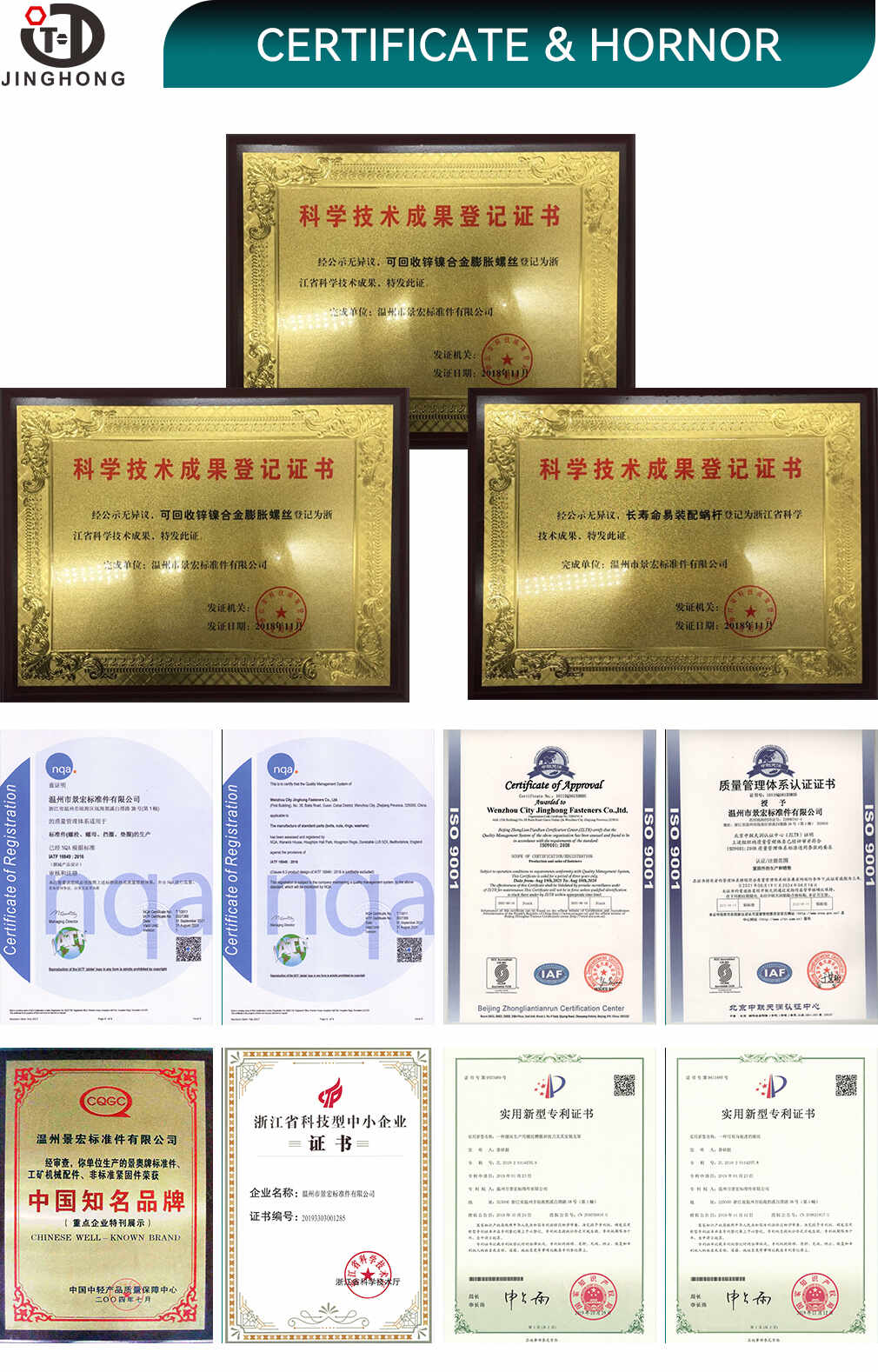
Patent Certificate
Six Core Advantages
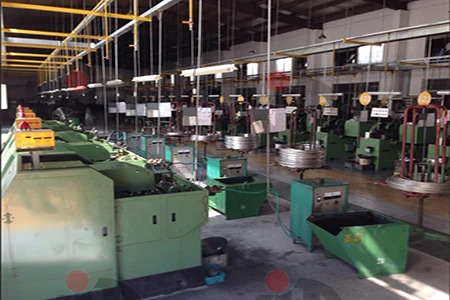
Production Workshop
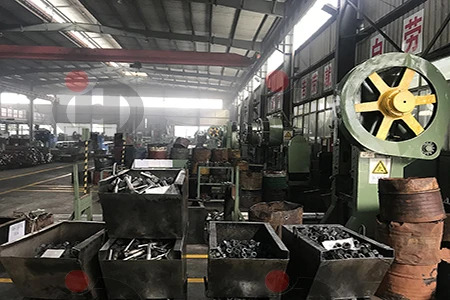
Production Workshop
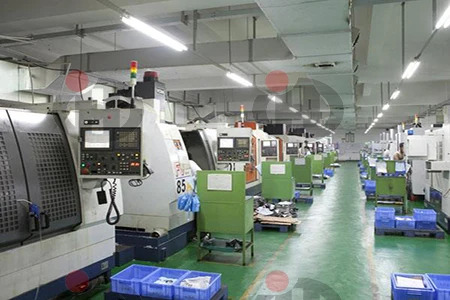
CNC Workshop
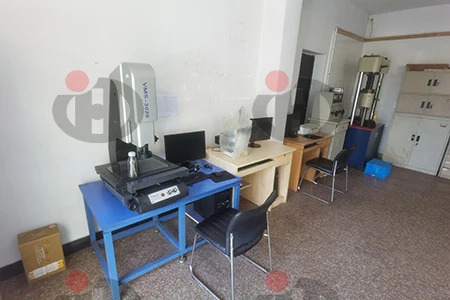
Testing Office
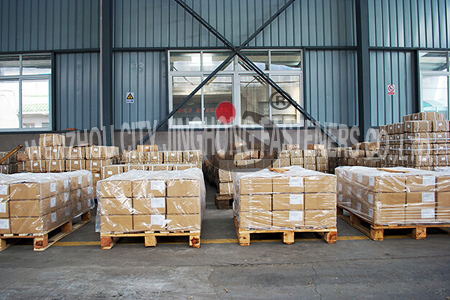
Finished Product Workshop
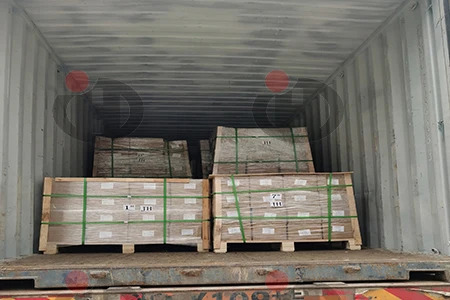
Loading And Transportation

Partners Visit The Factory
Hot Tags: DIN928 Square Welded Nut, China, Manufacturers, Suppliers, Factory, Price, Buy, High Quality
Related Category
Send Inquiry
Please feel free to give your inquiry in the form below. We will reply you in 24 hours.